

fun things to do with kids in wales    
  Travel for Kids
Wales
   
     
    West Wales
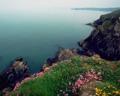
St. David's Head
  Pembrokeshire Coast National Park encompasses the coast of Pembrokeshire, protecting beaches and wildlife. You can find stretches of long sandy beaches or dramatic headlands, and miles of trails that are part of the Pembrokeshire Coast Path. For map of the park and list of beaches on north, west and south coasts, click here for the Pembrokeshire Coast National Park Web site.
   

Castell Henllys Iron Age Hill Fort (near Crymych) – Visit this reconstructed Iron Age Hill Fort, rebuilt on the site of original excavations. Kids can find out how the Celts farmed and fought over 2,000 years ago. Castell Henllys also has ancient breeds of cattle, sheep and pigs (species like those found in prehistoric bones on the site). Picnic along the Nant Duad river or ramble around the sculpture trail, creations from the Mabinogion, ancient Welsh tales of giants, hunters and talking animals.

St. David's Cathedral
  St. David's Cathedral (St. David's) – St. David is the patron saint of Wales, and March 1st, St. David's feast day, is celebrated all over Wales. The cathedral was built on the spot where St. David founded a monastery in the 6th century. Although it is not as ornate as some in the British Isles, largely due to periodic lootings and ransackings, St. David's Cathedral has been a sacred place in Wales for centuries. The Bishop's Palace across the way is a glorious ruin, and worth a stop.
      Also in St. David's, to learn more about marine life off the Wales coast, visit the Oceanarium, or Marine Life Centre which also has stuff from local wrecks. Whitesands Bay has a long sandy beach to explore. From St. David's, take a boat trip around Ramsey Island, a RSPB reserve and home to many birds, including puffins and razorbills.
    Pembroke Castle (Pembroke) – The reason to visit this great mighty Norman castle is to climb to the top of the Great Keep and pace on the wall walk. Kids might even imagine they're Henry VII, born in this castle, and who later became the first Tudor king of England.
Llangloffan Farmhouse Cheese Centre (Fishguard) – Visit the farmhouse cheese centre to find out how milk is turned into cheese, using traditional processes (it takes the whole morning). You can also see the farm's cows and pigs, taste the cheese, and buy some for your picnic lunch.

Dolaucothi Gold Mines (Pumpsaint, near Lampeter) – The Romans knew a good thing when they saw it, and it was gold in seams where it could be easily mined (of course, it took Roman slaves to do it). Tour these mines where you can see remnants of the old Roman works, including their aqueduct system, the underground tunnels, and working mining equipment.

  Teifi River Valley – The Teifi River flows from Lampeter all the way past Cardigan where it meets the ocean at Cardigan Bay.
      Museum of the Welsh Woolen Industry (Dre-fach Felindre, near Newcastle Emlyn) – Whether cardigans come from Cardigan, Welsh woolens are famous. This museum in a former woollen mill has demonstrations of traditional and modern techniques of carding, spinning, dyeing and weaving.
      National Coracle Centre (Cenarth Falls) – This is your chance to see a coracle, those round little boats, and find out how these boats are made. Along with the museum, which has a collection of coracles, there is also a 17th century four mill, nature trail and riverside walk.
Cilgerran Castle
    Cilgerran Castle (Cilgerran) – Although this 13th century castle is considerably crumbled, the location on the cliff above the River Teifi is stunning. This castle was built to guard the entrance to the river and control sea going ships as they passed by. Cilgerran Castle has a long and tumultuous history, as it was taken and lost alternately by the Welsh and English, and a romantic legend of Nest, the wife of a Norman noble who ran off with a Welsh prince.
      Welsh Wildlife Centre (near Cilgerran) – Explore the marsh and reeds along the Teifi River. Keep your eye out for otters and kingfishers. There are treetop hides where you can observe water birds.
      St. Dogmaels Abbey and Watermill (St. Dogmaels) – St. Dogmaels is another glorious ruined 12th century abbey in the tradition of Tintern Abbey. This abbey was also the site where the Sagranus Stone was found. On the stone was inscribed Latin and the ancient language of the Celts, allowing for the language to be deciphered. You can see the Sagranus Stone at St. Thomas Church across the way. Next to the abbey is the Y Felin Watermill where you can see a water-powered mill still grinding flour. The tearoom has pastries baked with flour ground at the mill.
      Cardigan Island Farm Park (Gwbert-on-Sea) – The Farm Park is located on the point where the Teifi River meets the sea, and Cardigan Island is in the distance. Stand on the cliffs (safely fenced in) to look for gray seals and you might catch a glimpse of bottlenose dolphins. Farm park also has Shetland ponies, pigs and usual breeds of cattle.
travel for kids | wales | west wales