|
|
|
|
|
|
 |
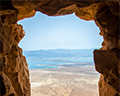
The Story: This natural desert fortress held military significance during early Roman periods, and was occupied by successive Judean kings. In the early first century AD, Herod re-fortified the site and constructed a lavish palace at the northern most edge, still well-preserved and offering an incredible view of the surrounding desert and Dead Sea. Here is where the Judeans held out against the Roman re-conquest of Judea until 73 AD, and where the soldiers committed suicide rather than face capture by the Romans. The impressive Roman siege works are still visible surrounding the fortress, encompassing the site with a siege wall punctuated by forts and siege ramp. |
|
|
|
|
| |
|
|
You can still see 2,000 year old fresco art on the mountain, remnants of the splendor of King
Herod’s castle, his Roman baths with its raised floor, and ruins of
the synagogue that the Jews erected here in this stronghold. |
|
|
|
|
| |
|
|
The Way Up – To reach Masada, choose the cable car, the Roman ramp or, for the more athletic, "the Snake Path." The Roman ramp is accessible to those who opt for overnight camping on sight. The Snake Path is the classic approach to the site offering a moderate hike that takes twenty to forty minutes. It’s highly recommended to start the hike an hour before sunrise, and to watch the sun illuminate the Dead Sea and fortress. |
|
|
|
|
|
|
|
At the cable car terminal, you'll find a snack bar and convenience store; however, there are no restaurants or shops at the top, so bring along food and water. |
|
|
|
|
|
|
|
Tip: Older kids (grades 5 and up) will appreciate the site far more if they understand its significance. Otherwise, it may seem like a hot, dusty ruin. |