

|
|
|
|
| | Athens | |||
Athens – Acropolis |
|||
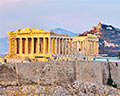 |
The Acropolis was originally a residential fortress, naturally inaccessible (try scaling those rocks). In Classical Athens, it was central to religious festivals and a glorious symbol of the city. The Romans made their own additions, and in later centuries, Parthenon was turned into a Byzantine church, crusader cathedral, mosque, warehouse to store gunpowder (gunpowder blew roof off the Parthenon). Acropolis is situated on a high plateau, right in the middle of modern Athens, spanning centuries in one spot. | |
| Spring is great time to visit – beat the heat. Read our blog post: Greece at Spring Break |
 |
Acropolis Museum – | ||
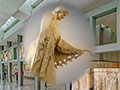
| Acropolis Museum has fabulous ancient sculptures and artifacts excavated from all around the Acropolis. | |||
 |
At the information desk on ground floor, pick up Family Trails brochures for kids to explore exhibits. Family backpacks to borrow have activities for older kids. | ||
| In the Archaic Gallery on first floor, check out statues of young women (kore) with lovely gowns, jewelry and hairstyles, three headed figure with snake body and Heracles fighting a lion, statues of Athena, and more. | |||
| On the second floor in Kids Corner are digital games, and Lego model of the Parthenon. | |||
|
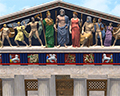
Parthenon Gallery on the top floor is a complete re-creation of sculptures from the Parthenon – combination of original and copies (many original sculptures are in the British Museum). Model of the west pediment is scene of contest of Athena and Poseidon, on the east pediment is birth of Athena. On the frieze all the way around are amazing sculptures of men on horseback, including chariot races. | ||
| Tip: Read our blog post: The Parthenon: Athens and London | |||
|
Entrance to the Acropolis – There are two ticketed entrances to the Acropolis. | ||
| The main entrance, Beule Gate, goes directly up through the Propylaia. This entrance is typically more crowded. | |||
| The side entrance is across from Acropolis Museum, on pedestrian Dionysiou Areopagitou street. Walking up to the plateau is way people arrived at the Parthenon in centuries past. | |||
|
Propylaia (Propylaea) – |
||
| Fortified walls surrounding the Acropolis were built more than three thousands years ago, a gateway through the walls was called Propylaia. | |||
| As you go throughthe zigzag steps to the gateway, keep in mind that the space between the columns was wide enough for horses and chariots to pass through, as well as crowds in procession. | |||
| On the right you'll see the Temple of Athena Nike, Athena in victory (nike). | |||
 |
|
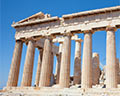
The Parthenon – The Parthenon was dedicated to the goddess Athena Parthenos, and inside the temple stood an immense statue. Just imagine what it was like, stepping into the darkened inner room, where you would feel bug-like in comparison to Athena, over 40 ft high, covered in ivory and gold, topped by a majestic helmet sprouting horses, holding a tiny victory statue in one hand, and a huge shield in the other. |
|
| The Parthenon ruins have a luminous quality – the warm, creamy marble changes color in different lights. Count how many sections it takes to make up a Doric column (11 or 12). | |||
 |
|
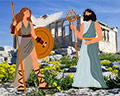
Erechtheion - Pandroseion – Check out the Porch of the Caryatids. The Caryatids, columns holding up the porch roof, represent six young ladies, daughters of the first king of Athens (they have excellent posture). | |
| This is also site where Athena and Poseidon had a contest over who was going to be the patron god or goddess of Athens – Athena won. Look for the olive tree, sacred to Athena. | |||
|
Theater of Dionysus and Odeion of Herodes Atticus – The theaters on the south side of the Acropolis are a "must see." In the Theater of Dionysus, plays were presented to honor the gods, and the greatest Greek tragedies and comedies, by Sophocles, Euripides, Aristophanes, were performed. The Odeion, built in the Roman era for musical events, is still in use today. | ||
 |
|
Filopappos Hill (Filopapou Hill) – Once you've tromped around all the sights of the Acropolis proper, it's time to head over to Filopappos Hill, a real oasis. From the wide pedestrian street, just follow the paths into the green shady trees – there are benches and picnic tables, so bring your lunch or snack, and relax. Once you've rested up, follow the paths to the top of the hill. This is where you get truly wonderful views of the Acropolis – seeing it at a distance, the Parthenon grows more impressive. | |
 |
|
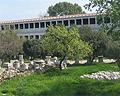
The Agora – The Agora was the center of daily life in ancient Athens, but it was more than the city marketplace – it was also law courts (and where people voted), senate meeting place, shops and workshops, shrines and temples. In later years, Roman buildings, including library, shopping mall, huge concert hall, more walls, temple to Roman gods, were added to this area. |
|
| The Stoa of Attalos has been completely reconstructed, and houses Athens Ancient Agora Museum, which has items of daily life in Athens. Stroll on over to the well-preserved Temple of Hephaestus. Originally the temple housed two statues, one of Athena, the other the craftsman god Hephaestus, who used his hammer to crack open Zeus' head, so Athena could be born. | |||
|
Horse carriage rides – Take an "old fashioned Greek taxi," a horse carriage ride to explore the neighborhoods around the Acropolis. Pick them up at the corner of the wide pedestrian street on the south side of the Acropolis, intersection of Dionissiou Areopagitou and Apostolou Pavlou. | ||
| Tips for the Acropolis | |||
 |
|
Download Acropolis of Athens app (free). Excellent introduction to the Parthenon as it was 2000+ years ago. |
|
|
Acropolis and Acropolis Museum are separate tickets. For the Acropolis, reserve timed-entry for 8 am if possible (early entry avoids crowds and heat of the day). Take a break for lunch, and return later to see Acropolis Museum, or visit on a separate day. | ||
|
In summer, bring water bottles, wear sun screen and hats. Plateau has dusty, slippery-smooth rocks – wear shoes or sandals with straps. No strollers allowed. |
||
|
No cafes or lunch options inside Acropolis ticket area. |
 |
 |
||
The Acropolis was the site of festivals, proccessions, temples and shrines, concerts and theater, but how to make it come alive for kids? Take a private family walking tour with a knowledgeable guide: |
|||
 |
Acropolis Tour for Kids | ||
 |
|
|||||
|
||||||
|
||||||
| (More children's books on other Athens and Greece pages) | ||||||