|
|
|
|
|
|
|
To preserve the animal habitats of the Galapagos, you cruise
around the islands on boats, sleeping on board. Cruises are typically five
days to two weeks. The boats are staffed with guides who are very knowledgeable
about plants, animals and geology, and speak English. Each day is divided
into water activities and exploring an island. |
|
|
|
|
|
|
|
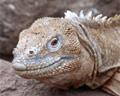
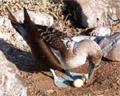
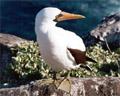
On each island, you will see an abundance of wild life, and
it's boggling how the animals birds are undisturbed by the presence of humans.
You can walk right by a blue footed booby with two eggs, sitting in the
middle of the path, and she won't even notice you're there. |
|
|
|
| |
|
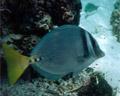
Depending on which islands you visit, and the time of year,
you will see different birds, reptiles, mammals and marine animals. If you
really like warm water for snorkeling, choose a cruise that goes to the
northern islands; around the southern islands, the water is much colder. |
|
|
|
|
|
|
|
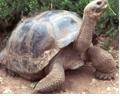
On your cruise, you're sure to stop at the Charles Darwin
Research Station to see the Galapagos tortoises. Due to a dwindling
population, they raise tortoises from hatchlings; when the tortoises are
big enough, they are released back into the wild. At the Research Station,
you can see the baby hatchlings, medium size tortoises, and big old (very old) tortoises. |
|
|
|
|
|
|
|
Close to the station is also a wonderful sand beach at Puerto Ayora, where you can build sand castles and see the nifty Sally
Lightfoot crabs (the baby crabs are black, like the rocks, the adults are
a brilliant red and yellow). For more information about the Charles Darwin
Research Station, click
here. |
|
|
|
|
| |
|
|
Tips for enjoying the Galapagos |
|
|
|
|
|
|
 |
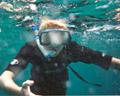
Water gear – Bring snorkels and fins (especially
fins) in kid's sizes. If you are cruising around the southern islands, July
and August is a good time because plenty of birds are in residence, but
the water is cold. Our family used wet suits, the short sleeved ones, and
were glad to have them. For an extra layer of warmth, add a "rash guard"
shirt under the wetsuit. The boats provide life vests, but if you have a
toddler, consider bringing a life vest suited to a small child. |
|
|
|
|
| |
|
|
Footwear – Sometimes when you go ashore, you have
a "wet landing" in the shallow water on the beach. Bring water shoes or
sandals that are good in the water, but sturdy enough for walking
on rocky paths around the islands. |
|
|
|
|
| |
|
Binoculars – Take along a pair of binoculars for
bird watching. With binoculars, you can see how an albatross comes in for
a landing, a blue footed booby diving into the water for fish, a masked
booby readying itself for takeoff from a cliff, or a frigate bird puffing
up it's red pouch. |
|
|
|
| |
|
|
Flashlights – Some islands have lava tubes, which
are like caves inside. Bring along flashlights for your lava tube explorations.
The lava tube on Floreana (Charles) Island has water in it. If your flashlight
is waterproof, use it as you swim or wade in the water, casting a spooky
glow in the inky blackness. |
|
|
|
|
|
|
|
Underwater cameras – Take a waterproof
camera, and capture your snorkeling adventures! |
|
|
|
| |
|
Sea sickness – In some of the smaller boats, you
will feel the swells, especially at night when the boats run through rougher
water. If your child is prone to motion sickness, talk to your pediatrician
about remedies. We use acidophilus for everything, including the queasy
stomach. |
|
|
|
|
| |
|
|
Sun screen – The Galapagos are on the equator
and you are out in the sun most of the day. Slather on the sun screen, and
keep putting it on throughout the day. Also, wear hats while hiking around
the islands. |
|
|
|
|
 |
 |
|
|
|
|
|
|
|
|
| |
|
|
 |
|
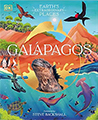
Animals and plants of Galapagos Islands are unique. This is an excellent introduction to the islands formed by volcanoes, voyage of the Beagle and Charles Darwin, wildlife marine iguanas, giant tortoises, lava lizards, racer snakes, seabirds, penguins, blue-footed boobies, marine life sea lions, whales and dolphins, crabs, sea turtles, plants, people and preservation. Every page is chock full of colorful illustrations. (Picture book)
|
|
|
|
|
|
| |
|
|
|
Discovery and formation of the volcanic islands, explorations by pirates, whalers, Charles Darwin's study of tortoises, birds, plants, plus habitats of each island and animals of the Galapagos. (Chapter book)
|
|
|
|
|
|
|
|
|
|
|
|
| |
|
|
 |
|
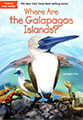
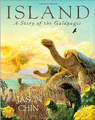
Discover the amazing plants and animals that live here on the Galapagos Islands, and nowhere else on earth. Close-up illustrations, from the birth of a volcanic island to the marine iguanas, penguins, frigate birds, blue-footed boobies, as they evolve on the islands over millions of years, capture the wonder of the Galapagos. (Picture book)
|
|
|
|
|
|
| |
|
|
|
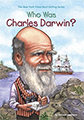
Illustrated biography of Charles Darwin, who sailed for five years around the world, stopping in the Galapagos Islands. From Darwin's collections and observations, he made scientific discoveries that pioneered theory of evolution. (Chapter book)
|
|
|
|
|
|
|
|
|
|
|
|
| |
|
|
 |
|
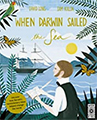
Discover Darwin's revolutionary research that changed the world. At an early age, he spent hours outdoors, collecting shells, eggs, plants. On his five year trip around the world, he gathered unique examples of wildlife from the Galapagos, these collections became the basis for his new scientific theory – evolution. Good for older kids. (Picture book)
|
|
|
|
|
|
| |
|
|
|
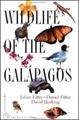
Not a kids' book per se, this is a super field guide to 200 different species of land and marine animals, birds and plants in the Galapagos, plus 400 color photographs, maps and drawings. (Guidebook)
|
|
|
|
|
|
|
|
|
|
|
|
| |
|
|
 |
|
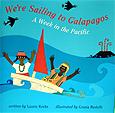
Sail to the
Galapagos, where each day of the week there's another fascinating
creature – giant tortoises, clacking albatrosses, sleeping
iguanas, skipping lava crabs, and more. Delightful, colorful cut-paper
illustrations, and fun for little ones. (Picture book)
|
|